What to say when a client says “AI can do this for free”
The client emails: “My nephew says ChatGPT can make a logo in ten seconds. Why is this $3,000?” Defending your price loses. Here are four things to actually say, plus the deeper fix that stops the question from getting asked.
 ChatGPT
Same prompt, 3 AI models — swipe to compare. Showing 1 of 3.
Made with ChatGPT (ChatGPT Images 2.0 (gpt-image-2))view prompthide prompt
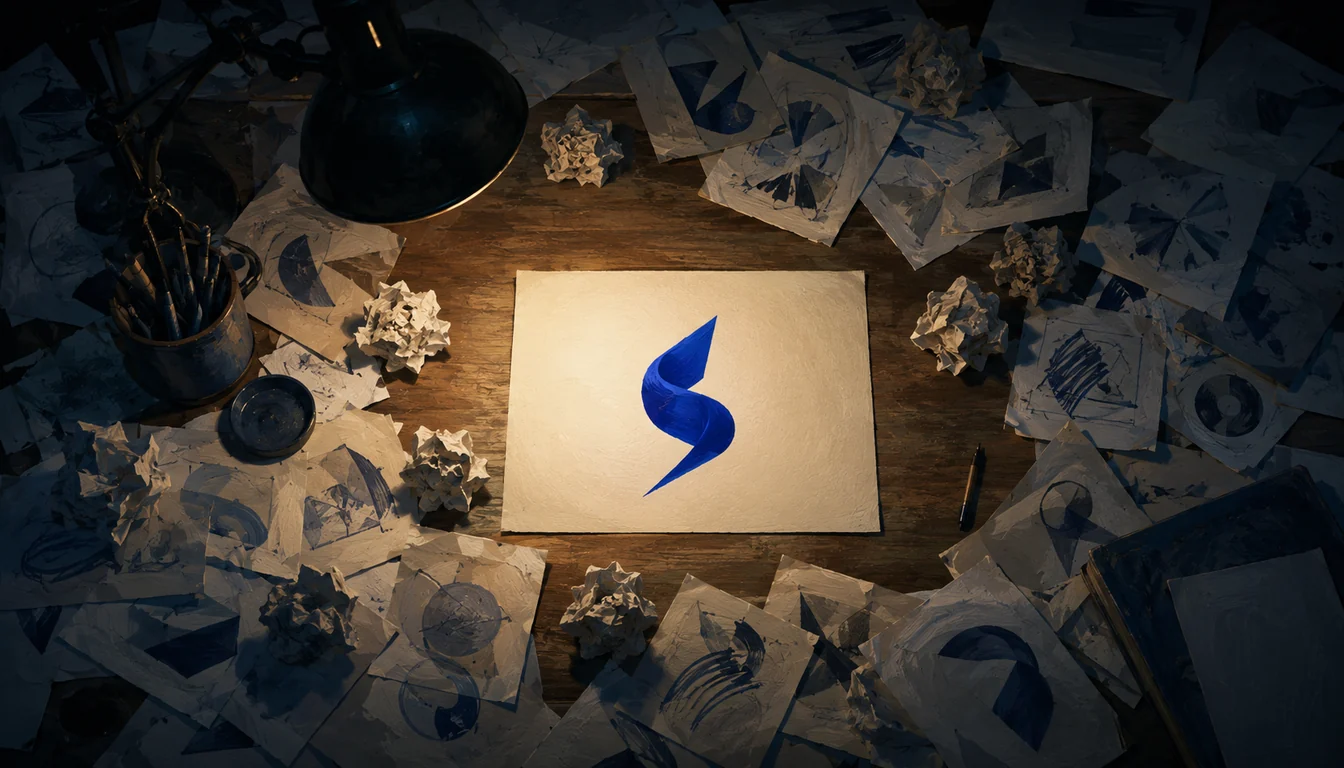
Create an editorial magazine illustration in a hand-painted style with visible soft brushstrokes and subtle oil-painting texture. NOT photoreal, NOT a 3D render. Palette: cool slate-navy and warm cream with selective deep cobalt blue accents, cinematic 16:9 widescreen. Composition: an overhead view of a designer's wooden worktable at night. At the center, a single finished abstract mark on a piece of cream cardstock sits under a warm pool of lamplight, the mark glowing a subtle deep cobalt blue. Around it, dozens of crumpled and discarded paper sketches and rejected drafts spread out and fade into soft shadow. A sense of the many options behind the one chosen. No people, no readable text or letterforms, no logos.
Hero for the pricing-fight piece: 'You're paying for the forty we didn't show you.' Non-phone; abstract marks only. Main hero / LCP of the multi-model gallery (ChatGPT + Gemini + Flux).
The message comes in around 4 p.m. on a Friday. You sent the proposal Tuesday. Three days of silence, and then this:
“Thanks for putting this together! Quick question though, my nephew showed me you can make a logo in ChatGPT in like ten seconds. Why is this one $3,000?”
And there it is. The weekend's gone now, eaten by the slow burn of a question that feels like it's asking you to justify your existence.
You've had this conversation. Probably more times this year than last. And the speech you usually run, the patient one about brand strategy and revisions and why good design matters, doesn't land. It never lands. You can feel it not landing while you type it.
Why defending your price is the losing move
The trap is a good one, so it's worth naming. The second you start explaining why you're worth $3,000, you've agreed to argue on the client's terms: that the thing they're buying is a logo, and the only real question is how cheaply a logo can be made.
Against a tool that makes logos for nothing, you cannot win that argument. Not by being better at it. The price talk, the portfolio links, the gentle lecture about kerning, all of it reads as someone nervously defending a number. And a number that needs defending is a number that's already on its way down.
So stop defending it. Change what the conversation is about.
Quick aside, because we'd rather say it than have you think it. Yes, we're a company that sets up AI systems for a living, and yes, we're about to coach you on pushing back at a client waving AI in your face. We've made our peace with the irony.
The honest version: the AI that coughed up your client's ten-second logo and the AI worth actually using in a business are barely the same animal. One makes slop look plausible for about a second. The other quietly runs the parts of your day that have nothing to do with design. That's a whole other article. Back to the $3,000.
One thing before the scripts. Swap “logo” for whatever you actually sell. The web designer gets “can't I just use that AI site builder.” The brand studio gets “my marketing hire can do the identity in Canva.” The packaging designer, the illustrator, the motion person, the UX team, every one of them gets their own version of the same email.
There's a pattern in it worth knowing. The fight is ugliest on the most commoditized work: the rush logo, the one-off graphic, the thing a tool can fake at a glance. It gets easier to win the higher the stakes climb. Nobody emails “can't AI just do our whole rebrand and product redesign for free” and means it. So if you keep having this argument on low-stakes scraps, some of the fix is upstream, in what you let in the door. We'll get there.
What the client is actually saying
They're almost never comparing quality. They can't; that's the whole point of hiring you. Underneath the question, one of three things is usually going on, sometimes all three at once.
They genuinely don't know what they're buying. They see the artifact: a logo, a homepage, a single file. They don't see the forty directions you didn't show them, the questions you asked that they'd never thought to ask themselves, the judgment that this one will still work after they've outgrown the nephew's taste, the trademark check that keeps them out of a lawsuit. The invisible work is most of the work, and being invisible is its whole problem.
It's a test. Some clients float the AI line the way they float any objection, to see if you flinch. Knock three hundred dollars off to keep the peace and you've just taught them the number was never real. Every invoice after that one is a negotiation.
And sometimes they're a little bit right. For something genuinely low-stakes (a flyer for the company picnic, a placeholder mark for a side project that might not exist in six months), the free tool is fine. Pretending otherwise is how you end up with a resentful client who nickel-and-dimes you for a year. Knowing which of the three you're sitting across from is the actual skill.
Made with ChatGPT (ChatGPT Images 2.0 (gpt-image-2))view prompthide prompt
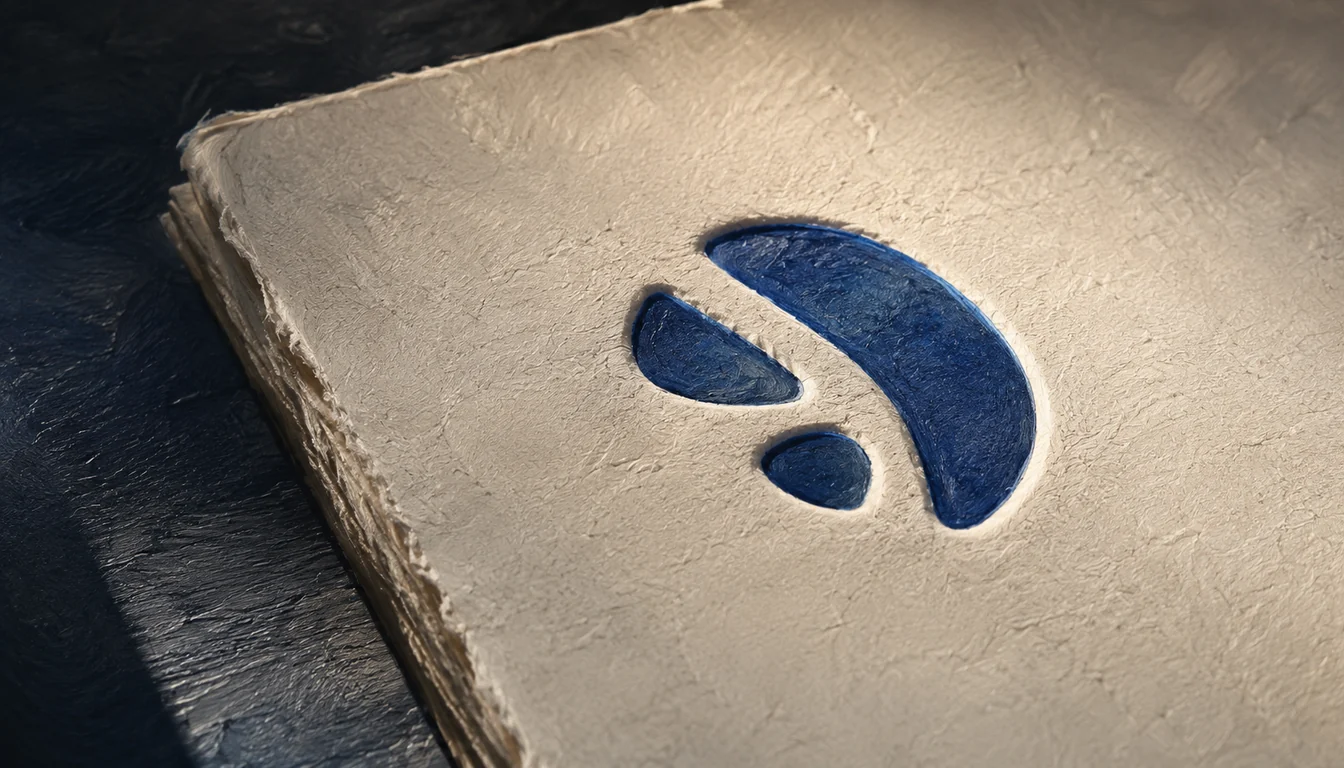
Create an editorial magazine illustration in a hand-painted style with visible soft brushstrokes and subtle oil-painting texture. NOT photoreal, NOT a 3D render. Palette: cool slate-navy and warm cream with selective deep cobalt blue accents, cinematic 16:9 widescreen. Composition: a close still life of a single abstract mark letterpressed and embossed into a thick sheet of cream cotton paper, inked in deep cobalt blue, with low raking side light catching the depth, the deboss, and the tactile fiber of the paper. A sense of weight, intention, and the human hand. No people, no readable text or letterforms, no logos.
Mid image, placed after 'what the client is actually saying.' The tactile human mark vs. flat AI output; reinforces 'sell the decision, not the deliverable.'
Four things to actually say
Not one script. The right move depends on which of the three you're dealing with. Keep all four in your back pocket.
The only person in the room who isn't afraid of the AI should be you.
The conversation you're actually trying to avoid
Here's the uncomfortable part. All four of those are damage control. They work, but you're still in the fight, on the back foot, after the proposal, with the weekend already ruined.
If you're getting the “can't AI just do this” objection on most of your leads, it's rarely about price. The durable fix sits upstream of any comeback: a front end that frames what's at stake before the number ever lands, and quietly screens out the buyers who were only ever going to shop on price. Get the order of operations right and the question mostly stops getting asked.
When we worked with a small brand studio stuck having this fight on nearly every lead, we didn't touch a thing about their design. We rebuilt the front of their business. Their intake form grew two quiet questions that sorted the tire-kickers out before a call ever got booked. Their proposal stopped opening with a price and started opening with the cost of getting the brand wrong, in the client's own numbers. Same designers, same rates, same beautiful work. The “can't AI do this” question didn't get a better answer. It mostly stopped showing up.
That's the whole idea in one line. Leave the craft alone, fix the business around it, and you'll spend less of your life defending your rate and more of it doing the work you actually like. We never touch the art.
And to be straight with you, none of this is a spell that wins every client back from AI. You'll lose some, and a few of those you should. The low-stakes jobs were never going to value what you do, and chasing them is its own slow leak. You won't win them all, and trying is a trap of its own. The point is to stop bleeding the good ones in a fight you can win before it starts.
If “can't AI do this for free” is a regular part of your week, that's the front of your business talking, not your prices. Start a no-pressure conversation. We'll map where your leads are leaking and which single fix would quiet the question down, and we'll keep our hands off your actual work the whole time.
Cheers, from the boring side of the business,
P.S. Next time it happens, run Move 1. Ask them to send what the AI gave them, and keep a folder of the results. It's the best sales collateral you'll never have to make.
Want help applying this to your business? Start a no-pressure conversation →
Frequently asked questions
- How do you respond when a client says AI can do your design for free?
- Don't defend your price and don't trash the tool. Both put you on the back foot. Ask them to send you what the AI actually produced (it's usually off enough to make your point for you), reframe what they're paying for (the judgment and the options you didn't show, not the file), name the cost of getting the work wrong in their own numbers, and be genuinely willing to let a low-stakes client use the free tool. Conviction reads as confidence in your number. The moment you get defensive, the client can smell the discount coming.
- Should I lower my price to compete with free AI tools?
- No. Discounting to match AI teaches the client your number was soft, and it attracts more people who only shop on price. You can't win a race to the bottom against something that costs nothing. Compete on judgment, outcome, and risk, or let the genuinely low-stakes client use the tool and keep your time for the clients who value what you do.
- Why do clients think AI can replace a designer?
- Because they see the deliverable and not the work behind it: the forty directions you didn't show, the questions you asked, the judgment that the work won't look dated in two years or quietly signal “cheap.” Sometimes it's also a negotiating test to see if you'll flinch on price, and sometimes their need is genuinely low-stakes and the free tool really is fine.
- Is it worth fixing AI-generated designs for clients?
- It can be, and demand for humans to clean up unusable AI output has risen sharply. Just price it as the skilled work it is, not as a discount because “the AI already did most of it.” Fixing broken AI work is often harder than starting clean, and the client arrives already frustrated. Charge for the judgment, not the file.
- How do I stop getting the “AI can do it for free” objection?
- It's usually an order-of-operations problem more than a pricing one: the price showed up before the value did. The durable fix is the front of your business. An intake that screens out price-shoppers before they book a call, and a proposal that frames the cost of getting the work wrong before it ever shows a number. When value lands first, the AI comparison rarely gets oxygen.