What should a creative studio automate first?
Before you buy a single tool, you draw one line: the work nobody automates, and the business around it that you can hand off without losing a thing. Here's the order we install it in.
 ChatGPT
Same prompt, 3 AI models — swipe to compare. Showing 1 of 3.
Made with ChatGPT (ChatGPT Images 2.0 (gpt-image-2))view prompthide prompt
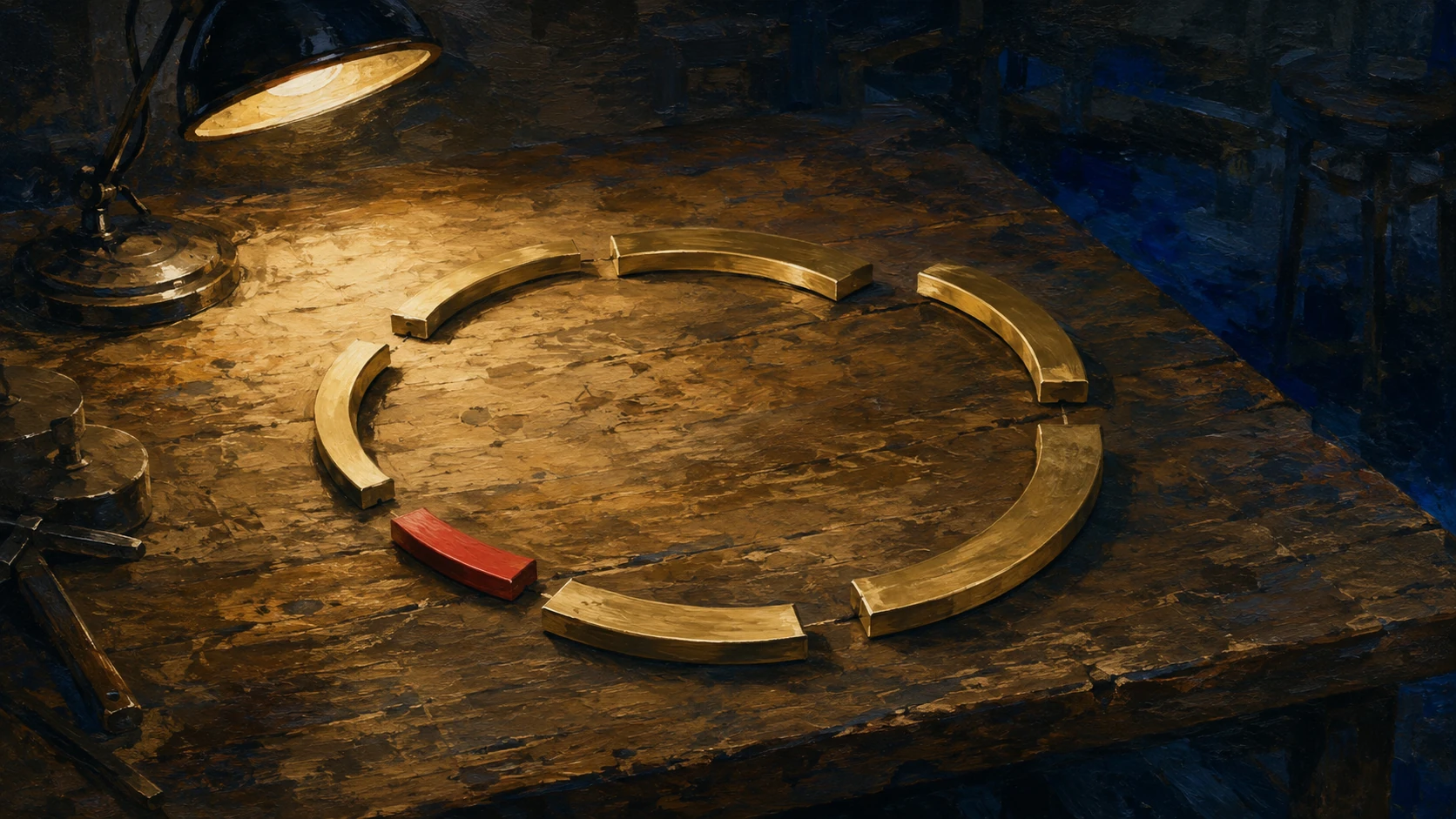
Create an editorial magazine illustration in a hand-painted style with visible soft brushstrokes and subtle oil-painting texture. NOT photoreal, NOT a 3D render. Palette: cool slate-navy and warm cream with selective deep cobalt blue accents, cinematic 16:9 widescreen. Composition: an elevated view of a serene creative studio in warm morning light, three plain wooden worktables arranged in a clear row receding toward a bright window, the first nearest table holding a small tray of unopened letters and glowing a luminous deep cobalt blue, the second table holding a single sheet of paper, the third holding a finished framed piece turned away, a strong sense of a deliberate order and 'start here first', calm and uncluttered, no people, no readable text or letterforms. No people, no readable text, no logos.
Hero (LCP) for the creatives cluster-hub piece — the three-table 'order' (inquiry tray nearest in cobalt = start here). Main slide of a 3-model carousel (Gemini + Midjourney takes follow).
Every studio owner who calls us starts in roughly the same place: which tool should I get?
Fair question. It's just three steps too early.
Before any tool, before any automation, there's one decision you make for free, on the back of a napkin. You draw the line.
On one side sits the work nobody gets to automate: the craft, the taste, the judgment a client is genuinely paying a human for. On the other side sits everything around it. The intake, the proposals, the follow-ups, the chasing. The business. That side you can hand off almost entirely without losing a single thing that makes the work yours.
Never automate (the art)
- The actual design, writing, direction — the work with your name on it
- The value conversation, where you read the room and the stakes
- Deciding what the work is worth and holding the number
- The final call on whether it's good enough to send
Automate first (the business)
- Catching and answering the inquiry that just came in
- Turning your call notes into a clean first-draft proposal
- Tracking what's in scope and flagging what isn't
- The reminders, scheduling, and invoice-chasing nobody enjoys
Get that line right and the rest of this article is just sequencing. Everything on the right gets automated, in an order. Everything on the left stays exactly where it is: in your hands.
Automate the business so completely you forget it's running. Never automate the part with your name on it.
Here's the order we actually install it in, and why each one earns its place ahead of the next. It follows the path a project takes through your studio: in the door, onto the table, through the work.
The front door, because that's where the money walks in
A real inquiry came in on Tuesday. It also came in to two other studios, because that's how clients shop now. Whoever answered first while it was still warm got the call. The other two found out they lost it when the calendar invite never came.
So the first thing to automate is the front door: every inbound message caught, acknowledged in your voice within minutes, and the real project sorted from the tire-kicker before it costs you an evening. A fast reply doesn't win the whole sale by itself. A slow one quietly loses it before you knew it started.
The full play, including what a good auto-reply actually says so it doesn't read like a robot, is here: the inquiry that booked someone else.
Fix this before you touch anything else. It's the leak that's actively costing you work you already earned the right to.
The proposal, because that's where the price gets decided
Once the right inquiries are reaching you, the next thing they hit is the proposal. And most studios lose deals here for a reason that has nothing to do with the number being too high.
A number landed before the value did. The value conversation is the part you keep, the part you should never hand to a machine. But the document around it, the one you keep rebuilding from a blank page at nine at night, is pure paperwork. Let a tool turn your call notes into a competent first draft. Then you spend your time on the framing, not the formatting.
Why second: a sharper proposal is wasted on a lead that already went cold, so the front door comes first. The whole breakdown, including the only order that works (value, then price, then scope), is here: the proposal that was already lost.
The line in the work, because that's where the margin leaks
Now the project is yours and the work is happening. This is where the profit you negotiated quietly walks out the back, one "quick change" at a time.
The fix isn't a tool that polices your client. It's a system that watches the agreed scope and flags the moment a request crosses it, so the conversation happens while it's a small, friendly redirect instead of a resentful one three rounds later. The boundary is yours to set. The catching, the tracking, the gentle "that's outside what we scoped, want me to quote it?" can run on rails.
Why third: scope only bleeds once you're winning the work, so the front door and the proposal come first. Here's how to draw the line so it actually holds: the revision that wasn't in the contract.
Underneath all of it: stop competing on a price you didn't choose
Those three systems give you your time back. They don't, on their own, fix the thing that keeps a lot of studios up at night: the client who says they can get it from AI for free, and means it.
That's a posture, not a workflow, and it's worth getting right because no amount of automation saves a studio that's already been turned into a commodity. Two pieces in this series are about exactly that. One is what to actually say when a client says AI can do it for free. The other is the whole reason we drew the line the way we did: automate your business, never your art, on being the studio a client can't simply swap out for a subscription.
Automate the boring half so you have more hours for the work. Hold your position so the work is still worth paying for. Those two moves are the whole game.
Where to start, and what to ignore
If you're not sure which step you're actually on, run a quick honest check on the last month.
Two or more? Start at the front of the business, not with whatever tool is trending. That's where the money is leaking, and the front of the list is the cheapest leak to plug.
One rule holds the whole thing together, and it's the one owners break most: do them in order, one at a time. Not all three this quarter. Pick the front door, wire it, let it run until you forget it's running, then come back to this list. Each step assumes the one above it is handled.
And the line stays drawn the whole way down. Everything you automate is in service of the work. None of it touches the work.
If you want a hand figuring out which step your studio is actually on, start a no-pressure conversation. We'll look at where your leads, your proposals, and your scope stand, and tell you the one thing to fix first, whether or not you ever hire us.
Cheers, from the boring side of the business,

P.S. Yes, we're an AI company that just spent a whole series telling you to keep AI's hands off the actual work. We're aware of how that sounds. It's also exactly why we're the people you want wiring up the boring half: we'd rather build you the back office than pretend a model can do the thing you spent ten years learning to do.
Want help applying this to your business? Start a no-pressure conversation →
Frequently asked questions
- What should a creative studio automate first?
- Inquiry response. Before anything else, make sure every inbound message gets caught and answered fast, because a lead that waits is a lead that books the studio who replied first. Once the front door is handled, the usual order is proposals (document the value conversation you already had), then scope tracking (catch the "quick change" before it becomes unpaid hours).
- What should a creative studio never automate?
- The craft itself, the value conversation where you read the room, the decision about what the work is worth, and the final call on whether it's good enough to send. Those are the things a client is actually paying a human for. Automate the paperwork around them, not the judgment inside them.
- Do I need new software to automate my studio?
- Almost never. The automations here layer on top of the tools you already pay for — HoneyBook, Dubsado, Bonsai, Moxie, your inbox and calendar — wiring up the gaps they leave between intake, proposal, and project. Ripping out the stack you already know is expensive and usually pointless.
- How do I automate my business without my work becoming AI slop?
- By keeping the automation on the business side of the line. Lead replies, proposal drafts, reminders, and scheduling can run themselves without touching a pixel of the actual work. The moment automation starts generating the creative output, you've crossed into the thing your clients can already get for twenty dollars a month. Automate so you have more time for the craft, not less of it.
- How long before automating a studio pays for itself?
- The front of the list pays back fastest, because it plugs the most expensive leak: inquiries that go cold. A single project you would have lost to a slow reply usually covers the cost of the whole setup. Proposals and scope tracking pay off more slowly, in hours you stop giving away, but they compound every month.

Know someone who needs this?